Emergency Intervention and Good Sam
A tragic death forty-six years ago launched an intriguing field of love research: emergency intervention. I’ve been wondering what it means for imitating the Good Samaritan.
In March of 1964, Katherine “Kitty” Genovese was attacked and stabbed repeatedly coming home from work one morning. At least thirty-eight people watched or heard the attack. But not a single person came to Kitty’s assistance. An anonymous caller reported the incident a half-hour later. Before help could arrive, she bled to death.
When the public heard that thirty-eight witnesses did not intervene, a flurry of questions arose. People wondered if such apathy said something about New Yorkers or big city culture. Others wondered if this tragic event reveals a fundamental flaw in human nature. People assumed the death of Kitty Genovese proves that humans are apathetic, callous, and indifferent.
Social psychologists Bibb Latané and John Darley and other researchers, however, decided to search for experimental answers. They wanted to know why onlookers and witnesses of crisis often fail to respond. Their research takes the name “emergency intervention.”
Latané and Darley focus upon the decision-making processes we use when deciding whether to help during situation-specific tragedies. The social scientists have developed a five-step model for how bystanders decide whether to intervene to help in an emergency.
The first step in the decision model is simply noticing the emergency event. This may seem rather obvious, but various factors influence a bystander’s ability to notice a victim. Bystanders experiencing bad moods, for instance, are less likely to be sensitive to their surroundings. Bystanders are also more likely to notice vivid events. A victim of “ho-hum accident” witnessed by a bystander having a bad day is less likely to receive help.
 The second step is interpretation. A bystander must not only notice a tragic incident, he or she must also interpret it as requiring assistance. In a series of studies, researchers have documented that bystanders are more likely to intervene when victims express strong distress cues. Those who observe an event and are confused by the victim’s silent or passive actions wonder if they should intervene. Bystanders are more likely to help screamers than quiet victims.
Sometimes environmental factors confuse or distract witnesses. In one study, a person wearing a cast dropped books on the sidewalk directly in front of oncoming strangers. In some instances, these books were dropped as a power lawn mower roared nearby. In other instances, books were dropped and the mower was not running. When the power lawn mower was silent, bypassers helped the injured book dropper eighty percent of the time. When the power mower was running loudly, however, bypassers helped only fifteen percent of the time. Excessive stimulation hampers a person’s ability to interpret what to do in an emergency.
The third step in Latané and Darley’s model for emergency intervention decision making is responsibility taking. Experiments show that bystanders who believe themselves the only witness to an emergency are more likely to help. Bystanders may shirk responsibility, because they assume others are better equipped or have more knowledge for helping victims. This phenomenon, labeled “diffusion of responsibility,” probably accounts for why no one intervened to help Kitty Genovese.
In one study, college students heard from an intercom system about an emergency nearby. Students who believed themselves the only ones hearing the emergency message were more likely to take responsibility to help than students who believed others also heard the message. Students who believed people others heard but were somehow unable to intervene were as likely to help as those who heard and believed themselves alone.
Step four in the intervention decision-making process involves deciding what kind of help to give. Here the issue is not so much willingness to help. The issue is discerning the best way to aide in an emergency.
One study tested the effectiveness of those with first-aid training when encountering an emergency. Both those with training and those without were equally as likely to respond to help a bleeding person. Perhaps not surprisingly, the medical assistance of those with first-aid training was most effective in the emergency. Those without such training often made the emergency worse. Sometimes those who believe they lack the expertise to help effectively will fail to intervene in emergencies like the one involving Kitty Genovese. Bystanders may worry that intervening will cause more harm than good.
 The fifth and final step in the emergency intervention process is the actual implementation of the decision to help. This step raises questions of costs and rewards for a potential helper.
A number of experiments have been done under the general rubric of assessing costs and rewards to those who help the needy. Many experiments are based on the notion that people generally want to maximize rewards and minimize costs. The cost-reward approach is associated with an economic view of social interaction, and one of its strengths is its capacity for measurement.
When implementing the decision to help a victim, bystanders may consider costs and benefits related to the time and effort that giving aide requires. Some may decide that the risk for personal harm is too great. Others may intervene to avoid negative emotional consequences – e.g., guilt – they may face should they choose not to help. Some may help because they know that helping will likely put them in a good mood. Others help because they find the victim in some way attractive, similar to himself or herself, or friendly. As costs increase, the general likelihood a bystander will help decreases. As rewards increase, the likelihood a bystander will help increases.
The cost-benefit aspect of decision-making has its limits, of course. For instance, the scheme seems not to account well for bystanders who help despite the costs seeming to outweigh the benefits. Some people act self-sacrificially so that the costs for helping far outweigh any rewards. But even the generally most self-sacrificial people may choose not to intervene, because they perceive the cost of helping too high.
When I think about emergency intervention research, I often think of Jesus’ story about the Samaritan who rescued a beaten man on the Jericho road. It seems like a classic victim intervention example.
In the story, a victim of violence and theft receives no help from two with whom he apparently had much in common. A priest and Levite pass by without pausing to give aid.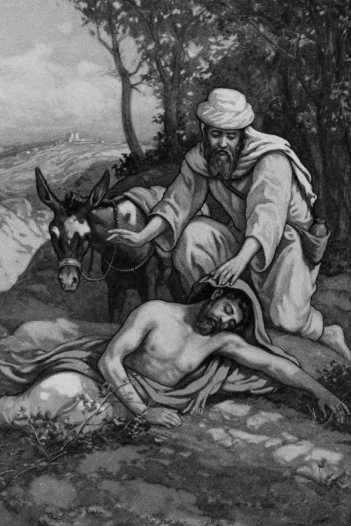
When I hear this part of the story, I wonder why I don’t help every victim I encounter. I wonder why I sometimes pass on by those who need desperately need help.
I try not to be too easy on myself or too hard when I think about my own efforts to help those in need. On the one hand, I can’t rescue every victim I encounter. In a world in which the needs far outweigh my individual abilities, resources, and time, I can’t intervene in every emergency. I’m not superman. And I shouldn’t feel guilty that my finitude restricts me from being the answer to every question of suffering.
When I first began work as a youth pastor, I thought I could always be the answer. I was idealistic. I ran myself ragged trying to help everyone in need. As a result, my family relationships and my personal health suffered. It didn’t take too long to discover I can’t be the Good Samaritan for every tragedy in the world – even every tragedy in my small congregation.
On the other hand, I know I sometimes give poor excuses for not helping victims of tragedy. I can rationalize my apathy. I can fail to help with my money, my time, my resources, or my empathy. The priest and Levite become my models, not the Good Samaritan.
Several factors largely influence my decisions now about how I decide to help those who suffer. One is my own discernment process. I find helpful listening to advice from wise others, spending time in prayer and reflection, and trying to be aware of the still small voice of what I think is the Holy Spirit’s leading. These help me discern when to rescue some and not others. This discernment process is not precise or inerrant. But I do think it is often helpful.
The second factor has to do with motivation: I need to be empowered to rescue victims. I think God is a necessary source of power for all motivation for doing good. Every good gift comes from the Father.
But other factors also motivate me. For instance, the community of believers with whom I associate plays a key role in persuading me to help others. The educational processes I have pursued often serve as motivational forces. And the memories I have of times that I have been a victim can motivate me. I tend to interpret the old phrase, “there but for the grace of God go I,” in this sense (not in the sense that God picks and chooses who will suffer).
A number of recent scientific studies suggest that rescuers are more likely to help victims whom they consider similar to themselves. Shared likeness motivates rescuers. I tend to help those whom I think are similar to me in some way.
My goal, however, is not to let the tendency to help those similar restrict my decisions help. Instead, my goal is to see similarities I share with everyone I meet.
Jesus says that the Good Samaritan had compassion for the beaten victim on the Jericho road. The Greek word translated “compassion” suggests empathy. To empathize with others is to identify ourselves in some way with them. The Good Samaritan’s empathetic response motivated him to intervene in an emergency.
The concluding words to Jesus’ story are simple: “Go and do likewise.” They serve well as a basis for our ethics. But they don’t solve all the issues of discernment and motivation. We still must make difficult decisions as we encounter the myriad of crises in our world both globally and locally.
May we learn how best to follow the example of the Good Samaritan in our day and in our ways.

Newsletter
For a 200-page book of Thomas Jay Oord's best-selling writings and to receive his newsletter, add your email address...
Comments
I can recall several times in my life when emergency situations were in front of me. I would very much like to say that in each I acted to intervene and provide assistance. I did not.
One of the greatest regrets of and one of the greatest sources of shame in my life was failure to intervene in a non-life threatening situation. I witnessed a man beat and cut his girlfriend in my living room. Theirs was a habitually abusive relationship-the victim would turn on anyone who suggested she get out. So maybe there was an unconscious or pre-conscious idea that she chose this. I don’t know. I do know that fear was a factor in my choosing not to intervene.
I really do not understand this fear for I have acted against my physical best interests before and since to help. Hence this is a source of shame for me. Maybe it was the dope and that this man was the connection. I don’t know the answer to this.
For Christians, intervention is not an option, but a necessity. There are countless calls in the Bible to take care of the marginalized and the vulnerable. One of my favorite scriptures in the Bible, James 1:27, says that, “Religion that God our Father accepts as pure and faultless is this: to look after orphans and widows in their distress…” This is a direct call to intervention in the world that all Christians must strive to satisfy.
This topic of human apathy and willingness to take a risk at the chance of helping others is always in the news and the subject of television shows. The first thing that comes to mind is the New Yorker who jumped in front of a subway train and kept a convulsing man down as a train speed above them. This was a very heroic act that the man received much attention for. However he had children of his own and people who relied on him. Would he have been seen as a hero if the plan failed both men died and he put the wellbeing of his family at risk? I think there is a humanistic emotion in all of us to respond with emergency intervention. While some jump blindly at the chance to help, others take the time to calculate the risks and what could be lost or become fearful of making the situation worse.
This is closely tied to the story of the Good Samaritan. I like how you pointed out how out of our control 99.9999999% of tragedies that occur. But those that we can directly impact, as Christians and as humans I think it is important to do what we can.
It is easy to judge the people and claim that I would have done something. I mean, in such a dire situation how did NO ONE go to her aid? But then I think about the times I pass a homeless person on the street and do nothing. Is that right of me to judge them when I too do nothing? I don’t think that we can help in every situation. There are so many problems in the world and so many people that need help that we can’t expect people to do something in every single instance. I think what we can always do is show love. Whether it is a simple hi or asking someone how they are doing, that is an example of love and it is also not turning a blind eye. We need to be aware of the trials and pains of the world and be willing to love others through those times. Of course, sometimes actions need to be taken and the physical needs, rather than just the emotional or spiritual, of a person should be looked out for. In it all, we do need to learn to be a good samaritan and love others.
When I think about the story of the Good Samaritan I like to think about the reasons for each element that was spoken. Like how common was it for a person to be robbed and beaten on that road and if it was common enough why there were no patrols. Why was he not beaten to death but left to die what does that say to us about the attackers. Why it was specifically a priest, a levite and a samaritan all traveling on the same path and the reasons they were not robbed, where they more cautious or what? Its important to understand the setting and elements involved to better understand the motives for peoples actions.
This is such an interesting concept. When sitting here reading this I feel outraged and like “of course I would have helped or intervened or did something! And not just stood by and let those horrible things happen.” But the reality of it is that maybe I wouldn’t have. I’d like to think that I would’ve helped, but days go by where I know of abusive relationship genocides around the world that I do nothing about. Granted there are certain limitations I have, but as a whole it is saddening to me that I might not help someone because of some idiotic reason like what will people think or I don’t have time for that. Situations like the one in the blog are like a double edged sword; we know that something should have been done, but in the same situation would we have done any different? I’d like to think that I would have, but there is a part of me that thinks I would have been one of the 38 people. These are the days where I feel little or no hope for humanity.
This is a very interesting blog post on many levels. And I believe this is one that I really needed to read. I have struggled most of my life with the idea that I have to save everyone. (This was drilled in me when I was growing up in a Southern Baptist Church.) Since I have been a part of the Nazarene church (and now that I am a local pastor) I have come to the understanding that was not what Jesus meant in Matthew chapter 28.
One of my spiritual gifts is discernment and I am very aware of my surroundings and it breaks my heart when I see a homeless man or woman begging for work or food on street corners. I have been blessed in that I have never had to witness a brutal stabbing or a shooting in my neighborhood growing up, but I did once witness a fight that occurred a few houses down the street. Many neighbors were out watching this fight, and my first reaction was “Did someone call the cops?” No one had. I ran into the house and called 911. It was strange to me that people were watching this happen, but not willing to call the cops or go over and break it up.
I also liked the part where you included the scripture about the Good Samaritan. That is a scripture that I think needs to be preached more on in churches, because this story is one that can easily be applied to our lives.
We cannot help everyone, a lesson I also learned the hard way, but in our own worlds, and the people we influence, I believe we at least need to be able to help them when they need it. I also believe help comes in many forms: prayer, giving rides, bringing food, sharing the Bible, or just letting someone know that you are there for them.
Thanks for sharing this Dr. Oord!
I haven’t come across many “emergencies” in my life yet, but being a life guard and going to school for nursing, I feel that it is my responsibility to react and help in an emergency. I do agree with a lot of the steps in the study done by Latané and Darley. I agree that if there is something to distract a person, they are less likely to help. It is odd, though, that people would avoid helping someone in distress. In who I am and who I was brought up to be, I can’t fathom leaving a distressed person behind unless there was harm to myself that would keep me from benefiting the helpless. I know that I cannot help every person who has a problem, but I think it is a great goal to help as many people as I can without hurting those around me.
This story is very sad. Why people did not help a woman being stabbed, I do not know. I can see how people would think that someone else might take care of it, but we need to step up and be the bigger person. There are too many people who just sit back and expect other people to do something about a problem. Instead, these people need to push themselves to be the leader and stand up for what is right. I understand the reasoning process that the researchers discovered, and I wish this wasn’t so. Much of what humans do is based on what is good for us, but we also need to think of what is best for others if we truly want to show love and serve God. Love is by your definition “promoting overall well-being” which can’t be done without someone taking the initial step towards it. I am not saying I am perfect at this myself, but it is one of several things I have tried desperately to work on, and I encourage everyone else to do the same because that is how we make the world a better place.
After reading about Katherine Genovese’s death and how there were 38 people who stood by and did nothing, I share in the questioning of those who asked why no one helped. Although people might have been worried that Katherine’s attacker would turn on them if they tried to help, which would have been my reason for not helping, I cannot help but wonder how the outcome would have been different if all 38 people would have ganged up on Katherine’s attacker. Surely a ratio of 38:1 means the bystanders would have had a great chance of stopping the murderer. Perhaps the fact Katherine’s attacker was not attacking the bystanders made the bystanders not get involved. Since the bystanders had no personal interest— none of them knew Katherine or the attacker—none of them had no motivation to help. However, despite whether you have a personal interest or not, when it comes to helping people and trying to live like Christ, love should motivate you to help when you have the opportunity to help. Therefore, I believe when you have the opportunity to help, help, otherwise you’ll be guilty of being just another bystander and dimming the light of Christ.
Looking at the “Good Samaritan” from a scientific perspective is intriguing indeed, but I would almost say that it’s too analytical or looking too deep for a meaning right in our grasp. It does seem to be good to understand how and why our brains function the way they do in certain circumstances, yet I would not want the intellectual knowledge to so overwhelm us that we forget the simple virtue of compassion and empathy. I would also hope that, even with all the brain activity going into making a decision, that we would develop such habits that when we come across situations like this one, we would act on instinct instead of taking precious time to consider consequences.
Wow I have never heard of the “Kitty” story before. This story is extremely brutal and I cannot believe that no one helped her. Yet at the same time I think that the social scientists are overanalyzing the situation. I think that being a good samaritan is only effective if you do not think that you will be physically harmed. In the case of “Kitty” it is very likely that the witnesses did not want to be hurt themselves. They might have thought that if they intervened that they would be hurt by those who stabbed her. The fear of being stabbed is a very strong motivation not to help.
As for being a good Samaritan, I think that it is only effective if we all help. Just like Dr. Oord discovered, you cannot help everyone in need. You will get burned out. Being helpful to those in need only works if we are all on the same team. I figure that we should use the talents that God gave us to help those in need more effectively. For example, the young should help the old with labor, but the old should help the young with financial resources. If one fails to help those in need, both people ultimately fail.
The story of “Kitty” certainly makes one think. What would I do if I was presented with circumstance that those onlookers were a part of? While I can see why many of them did not confront the attack itself, I do not understand why no one called it in sooner. The idea of the not being able to do everything is valid. I agree; it is very easy to become burned out if you try to do too much. And what help can you do anyone if you’re burned out? Looking out and taking care of yourself is a good thing. But I’m not sure if that principle really applies to the story of “Kitty.” Like I said earlier, I can see why observers of the attack did not actually confront the attacker, but I don’t understand why no one did anything at all until it was too late.
This scenario reminds me of the show “What Would You Do?”. The show replicates scenarios that can require an intervention by others; the goal of the each scenario is to see if people will intervene and or help in a situation. I can think of one situation in particular that was replicated in the show that reminds me a lot about the tragedy that happened to Genovese. During this scenario, a young man was beating an elderly lady on a street corner and the results were better than the tragedy that happened to Genovese but they were not exceptional because only a few of the witnesses intervened and stopped the young man from beating the elderly lady. Producers asked each witness about their behaviors toward the attack and the people that did not act usually defended themselves by saying they were afraid and they didn’t know what they would do. The ones that did take action during the scenario stated that they felt responsible for the situation because something bad could’ve happened if they did not do anything to help the elderly woman. There was no relationship to the actions of a witness and their faith. After reading blog post, I don’t think a person’s faith really matters in a situation like this one or the ones replicated on “What Would You Do?”. Honestly, if I were placed in that situation I would probably be so shocked and terrified to witness such a brutal action that I don’t think I would be able to do anything to help the victim. I feel that it’s human nature to react that way and I don’t think we should relate a person’s faith to the action or non action that a person takes when placed in a situation like Genovese and the ones replicated on ”What Would You Do?”.
I agree that as believers we should all strive to be like the Good Samaritan because in today’s society actions really do speak louder than words. I came across a saying not too long ago that said, “Your life may be the only Bible some people read.” By acting like the Good Samaritan we can witness to people who otherwise would refuse to listen. However, we must be realistic in the sense that we can’t help everyone in need; we must understand our limits and humanness. I liked your idea about having to have discernment and looking for this discernment from our congregations and through prayer. I believe that every person has a purpose in this life and through our discernment in helping others we can find this purpose and will fully be able to fulfill this purpose in the way God intended.
The story of the Good Samaritan is one of many great stories in the Bible that clearly lays out why God created us: to love and help each other. While reading this blog, I couldn’t help but think of reading chapter 31 in The Altruism Reader. That chapter focused on research about people who either were or weren’t willing to come to the aid of Jewish people during time of the Holocaust. A lot of the research in that chapter was similar to what was presented in this blog; things like finances, knowledge, and observation of the scene played a role in who was willing to help. I think this is a hard topic to discuss because we all would like to say that we would help anyone that we see in need, but the truth is we don’t. With today’s level of poverty you practically can’t go anywhere without crossing paths with someone who is in need of something, even if it’s just someone to listen to their story. It’s easy to beat our selves up about that reality, but it’s important not to. There are some cases where you just can’t help someone in the way that they need it, whether it’s financial, emotional, or physical. What we do need to remember is that while we may not be able to solve every person’s problems, we can help in some way, even if that way seems so small that it wouldn’t even matter. From the words of john Wesley: “Do all the good you can. By all the means you can. In all the ways you can. In all the places you can. At all the times you can. To all the people you can. As long as ever you can.”
It is incredible how the human psyche functions. Do we help or don’t we? What factors into our helping others? In some ways, I believe you can break it down quite simply – you either help or you don’t. In other instances I believe that, because we are flawed humans there are factors that simply render us unable to help – consciously at least. On the one hand we might walk away from helping someone – like giving money to a beggar – because we have “somewhere to be.” Afterwards, we may feel a sense of guilt, (maybe I should have given the beggar $5), but then is that truly love if we only do it out of some sense of guilt? I believe God’s love and good will aren’t satisfied simply by doing things out of guilt. Naturally we all like to think, if someone looks to be in danger we’d help them. However, from these studies it’s clear we all wouldn’t come to someone’s aid. I like to think no matter what, if someone truly looks to be in a life threatening situation or their well being is in jeopardy I will make an attempt to assist if I can. Fortunately I haven’t had to test this in the real world yet, but when the time comes I pray that God will guide me to doing the right thing.
In the story of Katherine “Kitty” Genovese, it’s easy to assess one’s self with a self serving bias and judge the 38 by-standers for not having assisted and say that if we were there we would have done something. However, when placed in a situation such as this our reaction to it is based on more than just our Christian virtues. As a Christian we should help our fellowman in need, but as the research presented in your blog suggest, there are many other factors which weigh in.
In my response, I do not want to evaluate the actions of the crowd or my own actions when faced with such a brutal situation, but I would like to take a step back and examine the good Samaritan. As you stated in you blog, in striving to be a good Samaritan can we save the whole world? As you make reference to your own life and starting off as a youth pastor and wanting to help everyone but eventually we are stretched too thin and are unable to help effectively. This reminds me of last week Chapel last week Friday; there was a video playing and the speaker made reference to Jesus as he passed through different towns and he said no to many opportunities to help the people in the towns. This stood out to me because sometimes we are searching to say yes to everyone, help everyone, do good for everyone. But we need to discern when something is for us to fix and when it is not in our power to fix it.
Being a “Good Samaritan” is a way of treating others that has been a lifeblood of Sunday School curriculums for hundreds of years. Yet, it is interesting to me how something so well-known can still be so desperately needed to be heard again. The odds are that at least a few of the 38 people who witnessed Kitty’s death had heard the story of the Good Samaritan, yet is was an anonymous person a half hour later that finally acted.
Even though we will burn out by taking the burden of helping everyone individually, if we stand together and each do our part, I wonder how much we could accomplish.
It amazes me that thirty-eight people witnessed the stabbing of Katherine “Kitty” Genovese and did not stop to help. It makes me think that maybe they were stricken with the fear that if they tried to intervene, they would be stabbed as well. What I do not understand, however, is why thirty minutes passed before anybody called the police. I can understand and relate to the fear of being hurt (the cost-benefit analysis) but it doesn’t ever hurt to call for extra help.
Being an accounting major, I like the picture of the cost-benefit analysis. It does say a lot about humans and their selfishness, but that is how we are. It is interesting that you can put human emotion and decisiveness into a science, and have it make complete sense. It makes me sad that we do have to see it that way because God did not create us to act out of selfishness.
I feel that we all pass opportunities by. Whether it is the opportunity to help someone else or the opportunity to better ourselves, we are constantly doing the cost-benefit and saying “hmm I could either sit here and relax and eat chocolate, or I could go for a run” or “I could help that person who’s car is broken down, but then I would be late for my meeting”. It is an interesting concept; one that is easy to grasp but not quite so easy to have a handle on.
This blog reminds me of my earlier comment on the Love of Jesus post about the study of lecturers for the Good Samaritan at a seminary school. No matter how well we are taught to intervene and help those in need, when the time comes to do so, acting can actually be difficult. Personally, I have thought a lot about this seeing as how my major is nursing. After getting my CPR certification I thought about how I would act if I was in a situation that required me to act. The idea seemed frightening. Even though I was trained to act, the thought of doing so seemed like a huge challenge. I want to believe in that situation I would do something – and honestly after all the experience I have had I think I would, but really you don’t know til it happens.
I fully agree with the statement, “I am not Superman.” I think that is something that we all need to understand and come to terms with; we cannot help every person in need. What we can do, however, is come together as the body of Christ and work toward the goal of helping those who are in need. Individually this cannot happen, but if we can try as a community to have the same goal, I think we can do more than we could ever imagine. I think this because the body of Christ has all different parts and it is because of those different parts that we, if we all can come together, can takle any situation with the love of Christ along side us. If the Church was more tuned to the sufferings of even their own congregations I think that would paint a different light on 1) how the church is viewed and, 2) how those in need seek help. Now, in the case of Katherine “Kitty” Genovese, I think that if we influence those in the church to be tuned to the pain of others we would not have thirty-eight people simply walk by, but do what they can to help.
This is a very important topic that brings several questions to mind for me, as it does many others. The idea that a woman could be murdered in front of several people and have no one intervene seems outrageous. I have heard of plenty of other situations like this and several staged events in which researchers set up scenarios to test whether or not people will help someone in need or not. I think for me personally I would like to think that if I saw someone in trouble I would help, however I think that the way in which I go about helping may be different based upon my abilities and ways in which I can be most helpful. I agree with the steps determined by the researchers and I feel that the one that stands out to me the most is cost vs benefit. To me I could leave out the benefit part and focus mostly on the cost. That is generally what weighs on my mind more heavily. If I were to run over and help someone who was being attacked at the risk I could lose my life also that would be in fore fronts of my mind and I dont think the idea that I could be perceived a hero of anything like that would even cross my radar until very very after the decision to act or not.
It is hard to believe that many people witnessed the stabbing of Kitty but did nothing about it. I would believe that someone who is witnessing an event where someone is being attacked or obviously needing help that they would step in and do something. I could see the chance with the Kitty stabbing that no one stepped in for fear of their own life but i would think that someone would have at least called 911 while witnessing it happen. Reading some of the other comments above I agree that we would hope that people would act on instinct and jump in and help the individual. Reading about this situation reminds me when three of my friends and myself came upon an incident at night on Garrity Rd. in Nampa where a girl had jumped out of her fathers car and was laying in the middle of the road hurt. The father was there and we could have left the girl and let the father take her. But with the four of us there and all having some basic emergency training we took the correct actions until the paramedics and police arrived. I would think that like in the situation I experienced that others would also stop and help but thinking about it do these people know the correct way to help? With the Kitty situation its a simple call to 911 but no one did that. Does our society just expect now that another person will take the correct actions and because of that they don’t need to?
I have to admit that I hadn’t ever considered the real reasons behind why people can “simply” pass by those in need. Of course, what I assumed was that those people were cowards and bad people, and partially responsible for the victim’s well being. So hearing the research done does indeed shed a little light on the reasons for such an action (or inaction). Yet I feel like those reasons aren’t good enough, even though I am probably being a hypocrite. I haven’t been in the situation, and while I would like to think that I would be one to immediately help, what if I freaked out at the last second?
And while I definitely agree that there is only so much we can do to help, I have to ask: what if that isn’t true? Sometimes it feels like an excuse when i tell myself that. We tell kids that they can be anything, do anything if they really want to and out their mind to it. Well, why don’t we say the same things about helping others?
This blog post brings up a lot of good points on the various reactions of the witnesses of tragic events. When I was in high school, I was the first on the scene of an accident where a girl was seizing in the middle of the road with blood pooled around her head. In complete shock, I did not do anything, and I did not believe I could do anything. I appreciated the 5 steps, or different levels, that were laid out. From these levels, I would have been in the 3rd step because there were so many other people that witnessed the accident, as well, that I just stood back and took it all in. This blog post was very enlightening and gave me something to think about the next time I might need to intervene.
The story of the Good Samaritan comes up a lot in life. It is used to teach a lesson on how to act toward others, to help younger children understand the importance of helping others in need, and as a reminder of human nature. But every time I hear the story I wonder, “how could they just walk by? How could someone not offer assistance to a person in need?” In my ignorance, I think, “I would never do that.” But, I’ve never been in a situation that required me to actually help someone. Yes, I’ve given change to people on the street, I’ve given change to the buckets at Christmas, but it does not measure on the same level as truly giving someone aid in an emergency. Would I jump in, no matter the cost? Jesus sacrificed himself in an emergency. He sacrificed himself to save us. He did not question the cost.
The bystander effect is one of the most confusing phenomenon to me. With all the influences of superheroes and being the savior, in addition to personally seeing somebody suffer, I would think that we were above this phenomenon. This last year, I saved a poor wounded puppy that I thought I had ran over, and when I called my dad, he told me to leave on the side of the road to die, which was completely out of the question for me. If people can be that compassionate towards animals, why not more for actual human beings? If there is a chance to help somebody, especially in those types of situations, I would think the normal reaction is to immediately help.
I think the fear is intervening and it turning out that the person didn’t need help. I think people get concerned that they are reading too much into a situation, especially if it’s a situation in which they witness in passing. But offering assistance in any time is far better than not offering assistance at all, when it’s needed.
I find it very interesting that noise impacts weather or not someone is going to help a person. It leaves me wondering about battle zone situations and how people’s reactions to help differ there.
I find the whole study interesting. I personally feel like the study is just trying to justify people not helping each other. I understand why they are doing it. It would be easy to not ever trust people if you knew that they choose weather or not to help you. But explaining it with distractions or if you had a bad day, makes everything ok.
It is interesting that we see problems that we can help with and decide to turn away. We would rather not inconvenience ourselves. It is easy to say that someone else will take care of it. It may be that we fear that we will make the problem worse. Our society does not encourage spur of the moment charity. You may be seen as a hero or you may be sued for intervening. Who wants to get caught up in court dates? It is easier to walk on by.
It is shocking and horrifying to know that in many situations, people would not respond to emergencies simply because they feel it is not their problem or that they have too many things already going on in their lives. The tragic death of Kitty Genovese was a perfect modern day example of what Jesus was talking about while sharing the story of the Good Samaritan. People are often too caught up in themselves to even think of helping others. This thought sickens me, but at the same time, I know I also am guilty. It is stories and thoughts like these that give inspiration to do better, to move forward and seek need with open eyes.
When it comes to helping people, I am not sure what runs through my mind during the moment of deciding to help or ignoring the situation. I personally grew up in a family where we did not give cash to homeless unless they were kids (hence I was raised in Brazil where it is not uncommon to see homeless kids). The way we rationalized this decision was by saying adults are more likely to go and spend the money unwisely rather than actually buying food or things they need to survive. This way of thinking though is not necessarily the way of the Samaritan I don’t believe. In my family for instance, we judged every homeless adult equally. We had presumptions that if given cash they would spend it on drugs or alcohol. But how about the ones who would actually feed their families? I believe it is important to pray about every situation, and ask God for guidance not only in feeding the poor, but in any situation of this sort.
When I first read that 38 people heard that this girl was being attacked and yet did nothing, I was shocked and angry. But then I remembered an incident that happened when I was about 12. One day while riding my bike I saw two boys bullying a third. I wanted to help him, but was afraid. The two boys were a lot bigger than I, and I told myself there wasn’t anything I could really do. I also entertained the thought that perhaps they were all just messing around. In which case, I would have felt very foolish if I stepped in tan attempt to save the day. So I simply just rode away.
I don’t know why no one stepped in to help that girl, but after thinking about it a little more, I’m guessing none of them were that terrible of people, and many of them probably regretted their silence. Maybe they were too scared, or thought someone else already called the police, or maybe some were unsure about what was going on and convinced themselves it was not what is seemed. I cannot justify these people doing nothing, nor would I want to, but it does open my eyes up to some of the times people needed my help, but I let fear and uncertainty stop me from giving aid. I hope that in the future, my actions wiould be more reflective of the Good Samaritan, not just in the extreme cases of need, but also in the smaller, more subtle ones.
I cannot believe that people did not intervene when kitty was being killed. I struggle with the concept of someone screaming for help and not doing anything about it that is soo crazy and even after reading this all I still do not find a good enough reason behind not helping a person who is in immediate danger and need.
I have never been in an emergency situation outside of work where I had an opportunity to help. Although I would like to say I think that I would help. At work I do well under pressure and when my adrenaline kicks in I just go. I am on automatic and I don’t even think I just do. I hope that in a non work environment I would do the same thing. I think about the situation of a man with say a bad and he is beating someone up. Can I really take on a man with a bat? Probably not, but I think that in that situation I would not go in alone but I would look for other bystanders to help me. At the very least call 911 as soon as I see it. I think that when people think of witnessing something like this they think they have to jump in and save the day. But what if you just yelled from your car to scare them or honked your horn to throw them off. That could be all it takes but people think they have to jump right in to do anything. I think this is all easier said than done but I think it is our duty as Christians especially to be as Christ like as possible and do what we could to help. I think of people who were on the planes that crashed into the twin towers and how brave some of them were trying to take down the terrorists. I try to wonder what I would do in that situation because it is similar to what you are talking about. I think this is good food for thought and something that we should even pray about.
I have always really liked the parable of the good Samaritan and I know that I try to live my life as Jesus says to “go and do likewise” but it is hard. There are situations where helping someone is wrong but only few. I know that there are times when a person is not trained could hurt a situation and that is never good. I have a friend who saved a mans life one night at a lake. The man was drowning and my friend jumped in not knowing where he was going to find the man drowning because of the darkness. God guided his path and lead my friend to the man in need. My friend eventually saved that mans life and that man has been ever so grateful sense. I have also heard of stories that the person that was saved sues the saver because of broken ribs or making a bad situation worse. I feel that we are not called in be in every situation but we are called to do what we can and be compassionate to those around us as Jesus has been compassionate toward us.
I thought that this article was very interesting. I think that it definitely is hard to help people in times of need when a real life situation actually occurs. I would want to say that I would help someone in an emergency but I really do not know. It is important to make sure that you are being a good Samaritan for the right reason, not for fame or glory, but for the good of the other person. We need to remember that we are not all superman and that sometimes, we cant help. This does not mean that we should feel ashamed, it simply means that there are others out there who will do the job better or the situation is out of our control. I do hope that someday I will get to help someone when they really need it and make an impact on their life, but if I don’t that does not mean I am not a “good” person, who knows, maybe I have impacted someones life in a way I did not even know by doing a small deed. It is important that we do not think we have to do a huge deed to change someones life, sometimes the smallest gesture can have the largest impact.
Reading about the murder of Kitty happening while thirty-eight (or more) watched and listened sickens me. I know it’s easy to judge when I wasn’t there. I know that they all probably thought they weren’t qualified to help and someone else would. As a petite woman myself, I don’t think for a second I would consider rushing in to help. However, I find it really hard to believe no one thought to at least call the police until a half an hour after the incident. A half an hour later? Are you kidding me? I would like to know if any of these witnesses were held accountable for their inaction. If nothing else, I think dialing 911 right away should be a public responsibility that was sorely neglected in this case.
Feelings of frustration over the above story aside, I agree that it’s hard to decide when to act in emergency situations. I learned recently there are even laws in place that discourage “Good Samaritans” because it’s very likely that a well-meaning individual may cause more harm than help. I cannot know how I would act in such situations, but I hope that if I happen to be qualified to help, that I would step up and do so. At least I pray I have the presence of mind to dial 911 if that’s needed.
The good samaritan story is actually not that common to happen now days and makes me sad to hear no one helped that poor lady. so much self absorption in this world has caused a sinful habit. people are born into a sin nature and it shows in the world of needs. if people would open their eyes to the problems around them and do something about it other than helping themselves, this world would be a better place.
I thought this was a very interesting blog. At first I was thinking, “Where is professor Oord going with this 5-step model for how bystanders decide whether to intervene to help in an emergency?” I applaud you though, I think you wrapped it up very well and I was not expecting the story of the “Good Samaritan” to be tied into this message. As I was reading the 5 steps or reasons people decide to intervene or not in these situations, I couldn’t help but agree or relate to some of these instances. I had to chuckle to myself when I read step 2, about how people are more likely to intervene when the victim shows signs of strong distress, because this is something my mom always taught my siblings and I, that if we were ever kidnapped to make as much noise as we could and to act in distress.
As I continued to read the 5-step process, I was able to think about all of these reasons people decide to help a victim or not and I couldn’t help but ask myself, what would I do in this situation, would I help? Then when you started talking about the Good Samaritan, I thought, I better help in any situation I can because that is what Christ would want. As I kept reading the blog and you offered your own thoughts about discernment and motivation, I decided that is how I will respond in the future as well. I will try to listen to the spirit as well and to do in my heart what I think is right.
The study done in this blog is a good idea of what goes through spectator’s minds as a tragic situation occurs. As a relational people our society has lost a little of that motivation to help others in need, especially in an immediate capacity or physical one. As the movie showed the average person gives way more of their earnings to charity, but this happens a lot with little face to face interaction through anonymous donations and just handing money to those in need. This way of helping those in need requires no responsibility and hazes the connection between you the helper and the helpee. This is one reason why actual volunteer work can be much more rewarding as it requires this face to face reaction and causes an immediate response.
I found this particular story very interesting especially because there were so many people who didn’t take action and help the woman who was in trouble. Most people would answer that they would help in an emergency but often times, we sadly find ourselves watching on the side. It can be scary or intimidating to stand out from the crowd or go against the current. Helping someone when no one else will is going against that current, it’s something out of our comfort zones. That can be very unsettling at times yet we should want to help those in need. That’s the confusing part. The fact that humans were created with tendencies to stick together yet when one of the “herd” is in trouble, we notice but rarely do anything. In my opinion, that must change. I agree with your goal to see similarities you share with everyone you meet. I think it is important to make an impact on everyone around in the best way possible. I thought it was unique how the Greek word translated “compassion” suggests empathy. We are to empathize and treat others the way we want to be treated, as Christ would do.
I think it is always important to think about the true intentions behind our “loving acts”. We act “lovingly” base on our own definitions of love, but such definitions might not be accurate and our “loving acts” often turn out hurting people because of this. Regarding to “emergency intervention”, what we found it that we often judge “emergency” and the degree of “emergency” according to our own values. I am not trying to argue such act is necessarily bad, but I want to point out that our “loving acts” often create bigger problems. For example, according to the “common sense” that we should to feed the poor, the food stamp policy should be completely perfect since it is such a “loving act”, but the fact is that it is not only imperfect, but highly problematic.
Things are more complex than we wish them to be, and I think our “loving acts” are often more for self-fulfillment rather than helping others. Again, I am not trying to argue that seeking self-fulfillment is necessarily a bad thing. But the problem is we often disregard the long-term consequences of our “loving acts” when all we want is the good feeling of “I did a good thing”.
I remember times in high school where I saw kids getting bullied or picked on and was too afraid to intervene because of looking stupid or getting picked on as well. I look back now and realize how shallow my fears were and how differently I would react in those situations if they were to happen again. I believe that most people don’t respond to these situations because they believe they don’t have the proper training to help them. As nursing students we are taught that because we have more medical training than most we are more responsible for intervening in situations where there is a victim of tragedy; that our responsibility as nurses is not to be caretakers in the hospitals alone but to be ready in any situation that calls for an intervention of bystanders.
It is very disheartening to hear of a story like this because it really puts a bad reputation on the nature of a human being. Some have thought that the human nature is always compassion whereas others have thought it to be violence most of the time. It’s interesting to see the research behind some of the instances in which people were more likely or less likely to help based on different noises or scenarios. It’s almost more disheartening to hear that an anonymous caller took thirty minutes after the event to call the police. It’s one thing, not to help, but another to almost complete ignore the situation and hope that it doesn’t have to involve you. One of the most common phrases that people say is “If I was in that situation…” or “if only I was there..” People say these things, but we never actually know what we will do until a situation arises.
It’s really unfortunate to know that something as awful as the stabbing of Katherine Genovese could have been stopped and her life could have been saved if just ONE person had intervened. To witness something as horrific as that and to not try and help is completely mind boggling to me. I think that at time we think we would be the ones to step in and make an effort to save someone, but when that time calls, I believe a majority of us would be met with some substantial inner turmoil on what to do. We all want to be the type of person who can say “Alright, this is it. It’s my job to do something”, and then jump in to this act of heroism, but the circumstances have significantly decreased our courage. I don’t think anyone can imagine what being in this situation would feel like and hopefully none of us have to find out.
The goal of becoming compassionate has revealed many questions to me. Stories such as the one presented about Katherine Genovese challenge me deeply. It astonishes me to hear that nobody would help in a situation like that, however it makes me wonder if I have/would react similarly. I wonder if there have been times that I have overlooked someone desperately in need, whether I do enough for those around me, or even whether my priorities are based on helping others enough. I often wonder if I should be involved in more community service than education or restrict myself from playing sports. And the challenge to help others while still maintaining a healthy level of energy and focusing on my own needs has been ongoing. One thing that I have found is that the limiting factor in my ability to help others is God. I must maintain a healthy relationship with the Lord in order to be effective at all and the more I make that my main focus the more effective I sense I have become. I hope to help people out of true compassion and not just because I think it’s a good idea.
As I was reading the portion where statistics are given about when people help in emergency situations, the factors that go into making that decision, I couldn’t help but wonder what the statistics would be of those helping someone who is evil. If someone who is known to be hurtful, physically or emotionally, is being harmed or in a life or death situation, would people help that person? Would I help that person?
This blog post was really interesting to me. While reading this it is easy to tell myself that of course I would have done something to help or that I would do something in an emergency situation. I think that it is easier to look at a situation after it has happened and attempt to tell yourself these things though. It is not always an easy thing to act when these types of situations arise. Fear can be a powerful thing and can paralyze people when they least expect it. I hope that when facing a situation or emergency I will be able to act with love. I hope that the good Samaritan will be my model.
When I have thought of the good samaritan story, I have often taken the bottom line of the story to just be– if someone is in need, help them. I suppose that is still the meaning, but like Dr. Oord put in the blog, we can’t help everyone all the time. I can’t help all the people in Africa, China, and everywhere. If I gave to every charity, and searched for anyone to help, I would be broke and tired and no good to the people around me. To discern when we should be the “good samaritan,” I think it depends a lot on what we come in contact with. I don’t think that if I was to pass a person that had fallen and couldn’t get up, that I would ever think I wasn’t supposed to help them. If you are able, and you came in contact with someone in need, I believe that you are called to help them. I think this, because many times when someone has asked me for something or someone needed help and I didn’t want to, I thought of the Bible passage about Jesus preaching to the people that He was the needy person who needed clothes, and they didn’t help. Because of that passage, I think we ought to help whomever we are able to. Although it is certainly not always the case for me, it is something for me to strive for and think about.
It’s crazy to realize that we have all of these thoughts before we actually even arrive upon the decision to help or not… In a life or death moment, I feel as though all of these thoughts are excessive and an unfortunate process. While I definitely understand these thoughts in deciding if, in helping, we ourselves may be harmed… or simply if our help would do more harm than good. However I think in realizing that, one could quickly make a 911 phone call. It shocks me that thirty-eight people could have done something, could have intervened, could have contacted authorities…and yet, no one did. While I personally know that I may not be a lot of help in an emergency situation, (I strongly dislike blood, I feel nervous at the idea of injuries, and know I am too weak to offer much help otherwise), however I like to believe that I may still demonstrate the qualities of the Good Samaritan by helping in whatever way I can. We certainly cannot all do everything, but we can all do something, and I believe that attitude is one we need to live into.
I think this is a great conversation. I love to help people, it is just in my nature. However the big thing I struggle with is homeless people. Decided if it is true need or just a false persona to get easy money. I also think that in an emergency situation I don’t have very fast of reactions and I get frightened easily so I am not sure how I would react to help in that situation. But giving to people in need and loaning a hand or money is never a hard thing for me to do. We reap what we sow so we need to all sow good seed.
I have always found the topic of emergency intervention to be an interesting one. When reading stories such as these, I always wonder to myself what I would have done in that situation. Would I have been bold and stood up for the woman? Or would I have been to afraid of my own harm to have stopped it? What do you do in that situation if you know there is a great possibility that you could end up getting killed yourself? It makes me think back to Pay It Forward, and how the boy was finally willing to stick up for his friend but then paid the ultimate price for it–his life. Is it worth it in that situation? Because realistically, the bullies probably weren’t going to go as far as killing his friend. What would Jesus call us to do with that? I hope we discuss this in class tonight because I am interested to know more!
The part that stood out to me the most was not that fact that many people do not help during emergencies, because I too often see people go about their days with out lending a helping hand. But I liked the paragraph that expressed those with first aid training reacted better in emergency situations. I relate to this specifically since I have been a lifeguard, head guard, supervisor, and manager in aquatic environments for almost 7 years that requires first response training. I strongly agree that those who are trained in first aid will be able to give more help in emergencies and also have the knowledge and as well as the confidence to do so. I am always promoting lifeguarding as a great first job because it teaches you to identify situations in which you can help others and has the basic training that allows you to give the most help you can. I am not saying others that do not have training will not act, but it does prepare you to act calmly and effectively in such situations.
I don’t want to claim that I have been in life or death situations and acted as the Godly woman I should have. I wouldn’t know what to do in that situation and I am sure I would act selfishly. But I have been in middle school and high school, dealing with bullies and knowing that I don’t have to see someone go through that. I was taught that I am a tough Palin, and because of that powerful title I have a responsibility to take care and stand up for the oppressed around me. This is the same idea I try to teach siblings and cousins. We should never be the bully and never allow a bully to stand. I hope the Good Samaritan would be proud of me.
This is very interesting topic, i think it is very interesting and telling of our society and humankind as a whole how selfish we can be (not necessarily are). We are born into a sinful world and there is evil everywhere. The emergency topic plays into this thought of an imperfect world, that there are many things that happen that are out of our control…alot of these disruptions in life being caused by evil. And i dont necessarily feel like God has commanded us to go out of our way to help others in times of need or emergency. But i feel like if someone is put in your path and needs help or in the case of an emergency it is almost fate that is calling for you to help and intervene. To me its doing something that i would want someone else to do for me.
It is very hard not to feel deeply challenged after hearing a story such as Katherine’s. It reminds me of the times where I decided to either help or not help those around me, and how much those events have formed me as a person who is striving to be like Christ. Specifically I am reminded of a boy named Benjamin from my Middle School growing up. Benjamin was frequently the butt of many of the jokes of the neighborhood bullies. There were a couple times when I was able to help him, but there was one time in particular where I remember not helping him. The memory haunts me to this day. The reality is that I cannot physically help all of those that I come in contact with. An even stronger reality for me is that those who I haven’t helped encourage me to help even more.
I know in my own life I have a tendency to want to help others. I feel like it is a calling rather than random acts. I recently was helping a person that was close to me as a child through the process of getting back on her feet after jail time and rehab. This particular person was a frequent flyer in the program and was trying to make this the last time for rehab. I came to her aid in every way that I felt lead by the Holy Spirit and over the course of 18 months was a huge part of this individuals support system. They seemed to be on a path of heathy choices and moving on with life. One evening a tragedy that was common in her childhood happened to her again and she turned back to drugs, lost her home, and was living on the streets afraid. Part of the agreement between myself and my husband in protecting our family was that she was not allowed to live in our home. As much as I wanted to see her succeed I watched her fail and return to her former life. I was a bystander in her life out of fear, fear that was real based on who she hung out with and the choices she was making and the possibility of getting hurt myself. I wonder what her life might be like if I had given her shelter. I know her choices were not mine and they were what made the outcomes. I just wonder how I could have been more. Was that fear healthy and wise or selfish? Did I allow her to be beaten? What if I had intervened? She is currently in jail….how could I help even now?
I have witnessed a couple of emergency situations and in each one went through a similar process. I have felt inadequate to provide care where someone was obviously seriously injured in a car accident. I witnessed a car get hit in the side at 50 and stopped to assist as I was the only one around. I have myself been injured in a few situations. I have a friend who was a fire fighter who explained it to me this way: stopping to render assistance is better than not doing it. It may not work. It may, in fact be inadequate. They may die. But your help may be the best chance they have.
A sad story, and interesting concept, and a difficult position. It’s quite sad and shameful that no one helped that poor girl. I wished that someone helped her. I wish that I can help people so much at times. I don’t know what I would do in that situation, but I know that I wish to help her. I’m not trying to make myself into a saint or a perfect person, but it’s what I feel. When I someone who is physically hurt, I know that I have to help them. When I was in the 4th grade, out on the playground, I found a girl sitting on the ground, clutching her ankle. I saw some kids just pass her by, and then I went over and saw her ankle was bleeding, she slipped on some of the playground equipment. She wasn’t crying or making a fuss, so I assume that’s maybe why others did not assist her, because they did not see her in distress. I went to get a teacher, and we got her to the nurses office. I know that this situation is completely different from the one mentioned in this blog, but I’m just saying, that when I saw her bleeding, I knew I had to help her. Which is why I say that I agree with Randy Kingsmore, “They may die. But your help may be the best chance they have.”
This blog actually reminds me of a show that I watch called, “What would you do?” In this show, the crew set up acted simulations of situations and see if someone will intervene. Examples: A boy is abusing her girlfriend, verbally, and somewhat physically, will someone intervene, or say a store clerk refuses service to girl because she’s Islamic, would some agree with the clerk or would someone defend the Islamic girl. Watching this show, and seeing people sometimes do good things or defend the victims from the abusers (whom are all actors) gives me hope for the world. My point here is that there are some people who are most likely not do anything, but I also know that there are some people who will intervene and help those who need aid. It’s what gives me hope in this world that makes me question whether it’s a nightmare or a dream.
Being an economics major, I enjoyed hearing the statistical analysis of a ‘fight or flight’ situation or in this case more of helping someone else. I would have thought that the cost/benefit analysis would have held up pretty well throughout the study. It did for the most part, until the idea of self-sacrifice came along. Self-sacrifice breaks down an economic rationale. I am not sure how an economist would fit that variable into a study. I try to be a ‘hybrid-economist’ where sometimes I break the logical, deductive reasoning that most economists employ. I feel that sometimes there are extraneous situations, like a self-sacrificial situation, where cost/benefit analysis should not be implemented. I am not perfect at breaking my usual train of thought, but I am trying to get better and will continue to do so.
Learning about the irrationality of our choices and the seemingly arbitrary influences on our action can be discouraging. However, the information learned from the studies mentioned and many similar studies offers more than just an explanation for why people act the way they do. Once we learn what factors actually influence our decisions most, we can manipulate these factors when possible to make it easy to do the right thing. We also know that habituation is one of the strongest forces in determining action. Knowing this we can train ourselves to do the right kinds of actions when the situation is calm and we have more conscious control over our actions, so that when it really matters and emotions are clouding our judgment we don’t have to think, doing the right thing comes naturally because it has been practiced. Hopefully we won’t ever need to intervene in a catastrophic situation, but making a habit of helping everyone you see struggling (within reason) is better for everyone, and helping will come naturally if you ever do find yourself in a serious situation.
This blog was so interesting to me because it made me really think about what I decide to do in emergency situations and I realized I’ve never really been in a scenario that would have needed my help. I’ve volunteered at a camp that has kids with terminal illnesses for five years and I’ve still never been in a situation where I really needed to jump in and help someone. In my case, someone much more trained than I am was always there with me so I never had to do anything. This blog says that people who are trained for emergency situations are just as likely to help as people with no training. This was so interesting to me because I feel like if you have training for a scenario, when that scenario happened, you would want to help them knowing that you probably could. I’m only CPR certified but I can’t imagine seeing someone on the ground not breathing and not going through the steps I was taught to help them and just leave them there for someone not trained to come help. I’m sure it’s different in an actual emergency situation but I like to think I would help no matter what…
After hearing about Katherine Genovese’s tragic story, I was completely shocked and, in all honesty, extremely disappointed. It’s sickening to imagine thirty-eight individuals stand by while Katherine was repeatedly stabbed. That being said, I begin to wonder how many students in our class would act in an emergency intervention. Looking back, I think most of us would say that we’d undoubtedly step-in and help; however, I think a majority of our class would hesitate in reality. I think it’s extremely important to realize that as an individual, it’s impossible to intervene in EVERY emergency. Like Dr. Oord said, “In a world in which the needs far outweigh my individual abilities, resources, and time, I can’t intervene in every emergency. I’m not superman and I shouldn’t feel guilty that my finitude restricts me from being the answer to every question of suffering.” However, I think it’s also extremely important that we should intervene if capable. Don’t let a “bad day” prevent you from saving someone’s life.
I have a lot of different thoughts when I read this. I like to assume that I will be like the good Samaritan and help when I see people in need or in a situation where they need help. After all, I am going to be a nurse. It’s my life work to help those in need! But I wonder reading the section about the risk to benefit ratio if I would have intervened in the 1964 situation. For 30+ people to ignore the situation it must have been more dangerous than we imagine. I am not saying others did the right thing by not stepping in but it does bring up the self-sacrifice discussion to mind we had yesterday. Would intervention have saved this girl or would it have just caused another person to lose their life? I do not know how I would react in a situation like this but I like to think that if I am faced with situations where people are in need, I would respond in a giving and helpful way, as the good Samaritan did.
After talking about self sacrificial love in class this blog brought up a good point. People most likely don’t help because they are afraid they’ll cause more damage or afraid that they can get themselves hurt as well. With the kitty incident, my opinion is that people probably thought someone else would help or they hey if I jump in I could end up getting stabbed as well. In a law and order show I watched these college kids ended up watching a rape of a girl on the internet and when asked why they didn’t report it sooner, one young guy said “because I thought someone else would”. For me, I believe I fall under the fourth reason why people don'[t help. Even though I am first aid certified I’m terrified of hurting a person even more, because I am still a student and haven’t obtained my degree. I guess it’s a confidence issue. But I also agree that hopefully when an issue/emergency comes a long that I will help and not just stand by and watch someone die. I think that after the person who was harming someone else left I would rush to help the victim but I haven’t been in a situation like this before so only time will tell.
I was very quick to judge when thinking about all the people that did not help the suffering woman as she was being stabbed. This is a hard situation to imagine though because I have never been faced with the moral dilemma of choosing to help a person either live or die. From the outside looking in, helping her seems like the obvious choice, but if I were actually there, my thought process may be a little different. Most likely, I would think about the harm that would come to me if I tried to intervene. If the person stabbing had a knife, he would most likely stab me too, which would probably scare me away from helping. In that situation it may be best to simply call for help. If the woman would have seen a doctor immediately after she was stabbed, there is a chance some of her blood could have been spared and she would have lived. I do not think the majority of these situations are black and white, but I would like to think that there is a way to help the dying woman that would not risk my life as well as hers.
Reading about the helping process it reminds me of the “Boy who cried wolf.” I’ve been standing around and upon hearing screaming I’ve been concerned then upon hearing laughter or levity my concern passes. I would be worried about ever not responding to such distress for fear of it simply being unnecessary.
Wow! The beginning of this article is so disheartening. I can’t believe it took 30 minutes of people watching and listening to that happen to Kitty before someone finally did something about it. To me, this blog just showed me how selfish our human nature normally is. Those people watching Kitty die didn’t even have to go “save” her. A simple heroic act would have simply just been calling 911 right when they saw the accident. The people who passed her by and thought either I don’t have time or I just don’t want to get involved, but someone else will help – shame on them. It’s sad how we are so caught up in our lives that we can’t even notice the situations around us that beckon for our aid. I pray that never in my life time when I am passing someone in need, will I ever have the thought: oh, someone else will do it. The least I can do for someone who needs my help is lift up a prayer for them. God is a lot bigger and much more powerful than I am, so even if there is nothing that I can contribute to one of these situations, at least I know I can call upon the One who is the greatest help to those in need.
I read this after I went to Don Johnson’s talk for awareness week, and can’t help but think of the girl that a group of college students saved from being sacrificed. Upon hearing that this girl was out there and was in imminent danger, they chose to step in and to help and they literally saved her life. Kitty, however, was not as fortunate as the girl as she ultimately lost her life without any intervention at all, which leaves me more inclined to think that these steps for intervention do, in fact, matter. But I wonder if relying on these steps is better or worse than relying on someone’s character in evaluating their ability or inclination to intervene. I would like to think that all of us would have the heart and the love to intervene on behalf of anyone in Kitty’s position, but if the psychological steps are holding us back, then I wonder to what extent our love can be exercised freely. I personally would like to think that God can place on any individual’s heart a love that can outperform these psychological barriers so that they might intervene on another’s behalf.
There will be many times in our lives that we will be confronted with instances where we either choose to be the by standard or become the intervening samaritan. As a society we also analyze such situations and ask people that million dollar question, “do we intervene or should we standby”. For example the “What Would You Do” show that was on abc. This show would do a social psychology experiment where they would act out some cases in public and see how many would respond. In this case Jesus intervened in to help the people regardless of their sins. Social Psychology also states that no one will intervene in such circumstances until someone else acts upon it. It is difficult to act when you don’t have anyone else approving of your action until someone else does. I believe in the steps given to us in the story we read. It is logical and does catch people’s attention. I also strongly believe that it also depends on people’s value and character. I believe that in some people it is innate to help others in distress. I believe that the way I can help people is to help them in what I can and turn to God and pray that he would bless they’re needs.
I remember in a first-aid training in high school talking about the same topic of Emergency Intervention. We mentioned this strange occurrence where people will see an emergency and not respond. My teacher told us of a particular time when she was involved in an emergency and someone had to yell at her to bring her out of her shock so she could start doing chest compressions. As humans, our response can be to be overwhelmed and to shut down. I don’t know why and I don’t know what instinctual purpose it serves, but I know it can be overcome. That same teacher talked about how years later another similar situation occurred and she was the one to be fast-acting and change someone else’s circumstances. Her only explanation for the change was that she learned to be more aware of the people around her.
I remember learning about Kitty in Intro to Psychology and the “Bystander Effect.” If i remember correctly she was assaulted and then the he came back again and beat her. Its amazing and unnerving to know that more than 30 people could have helped her but one one person actually call the police. She didn’t need to die. All too often American have this”I” mentality like what can I do What do I get out of it. We are also quite to place the blame with others. The Good Samaritan story is one of my favorite. I do believe that God rewards us for our good deed and what goes around comes around.
I have also seen the show “What would you do” and its interesting to see how people react to situations i.e. racism, theft, attacks. In most cases people notice it but do not get involved and assume someone else will get it like in Kitty’s case.
I think that providing help in minor situations/events requires learning a balance in lifestyle and health that is different for each person; I think that some people have greater constitutions/sleep needs/energy concerning their ability to offer help, and that requires time and effort to discover a correct balance that is in line with scripture. However, in emergency situations, our own energy concerns and the like should not come into account; we have adrenaline for things like that. There should be a recognition of situations where you cannot help, but rarely can you make that decision accurately without personally assessing the situation. Clearly, I think that there are real issues with emergency intervention across the globe, and that it is our duty as humans, and especially as Christians, do demonstrate sacrificial love by at least being present in times of crisis, and offering assistance even when it is detrimental to ourselves (although attempting to do something that you are completely unqualified to do is an exception).
The idea that comes to mind after reading this post is that maybe an act of a good Samaritan is not an act of God but an act of the free will the God gives us. The facts about how the surroundings and circumstances affected peoples willingness to help individuals in need was terribly interesting and frankly really sad. It is sad because I know that I also fall short of helping individuals that I see because I want to continue on with my life and to not have to worry about the situation that is before me. I would like to think that it its God’d desire for us to use our free will and become the good Samaritan.
The common problem the helper faces is exhaustion. A lot of this exhaustion similar to our bodily system. The social studies on human helping have showed many aspects that go into ones action to help, which are rooted in our own physiology given to us by God. In our limbic system, we have many areas that are centered on learning, memory, and emotional feelings. These areas are connected, and this is demonstrated in many of the facts mentioned by the social scientists. For example, individuals were less likely to help when they were overwhelmed with sensory stimulus around them. In this example our hippocampus, amygdala, and cingulate gyrus are working together. We learn and feel in the same neurosystem and too much stimulation, while critical decisions have to be made is overwhelming. The great part about this however is that in these critical scenarios, we learn much about our own abilities to help others. Like you said it is critical that we understand our own limitations and act accordingly, but we should always remember that the Holy Spirit renews us back to God for continued strength and discernment.